Introduction
The Basque Burnt Cheesecake, or as it is famously called, the “Gâteau Basque Brulés,” is a masterpiece of gastronomy that has captured the attention of the globe with its countryside beauty and soft, silky texture.
This traditional dessert hails from the Basque country in Spain and France, where it has been long enjoyed for generations, honed by native pâtissiers, and loved by locals.
The Basque Burnt Cheesecake’s rise to global fame can be attributed to its unique combination of flavors and textures, which has captivated the hearts and taste buds of dessert lovers everywhere.
In this recipe blog, we’ll delve into the rich history of the Basque Burnt Cheesecake, exploring its origins, evolution, and cultural significance.
We’ll also include a step-by-step recipe to prepare this regal dessert at home, along with tips, tricks, and techniques to get a perfectly caramelized crust and a creamy, dreamy interior.
Table of Contents
A Brief History of the Basque Burnt Cheesecake
The Basque Burnt Cheesecake originated from the Basque traditional dessert, “Gâteau Basque.” This dessert has a history dating back to the 17th century when it was enjoyed on special occasions like weddings and festivals. With time, the recipe changed, and the cheesecake variant came into existence.
The “burnt” feature of the cheesecake is an intentional method where the sugar at the top of the cake is caramelized to produce a golden-brown, crunchy crust.
The method is reported to have been invented in the Basque region, where it was utilized to introduce texture and flavor into classic desserts.
The Features of an Ideal Basque Burnt Cheesecake
An ideal Basque Burnt Cheesecake must possess the following features:
The Basque Burnt Cheesecake is a work of art in texture and taste, with a distinct set of features that differentiate it from other cheesecakes. An ideal Basque Burnt Cheesecake should have the following attributes:
1. Caramelized Crust:
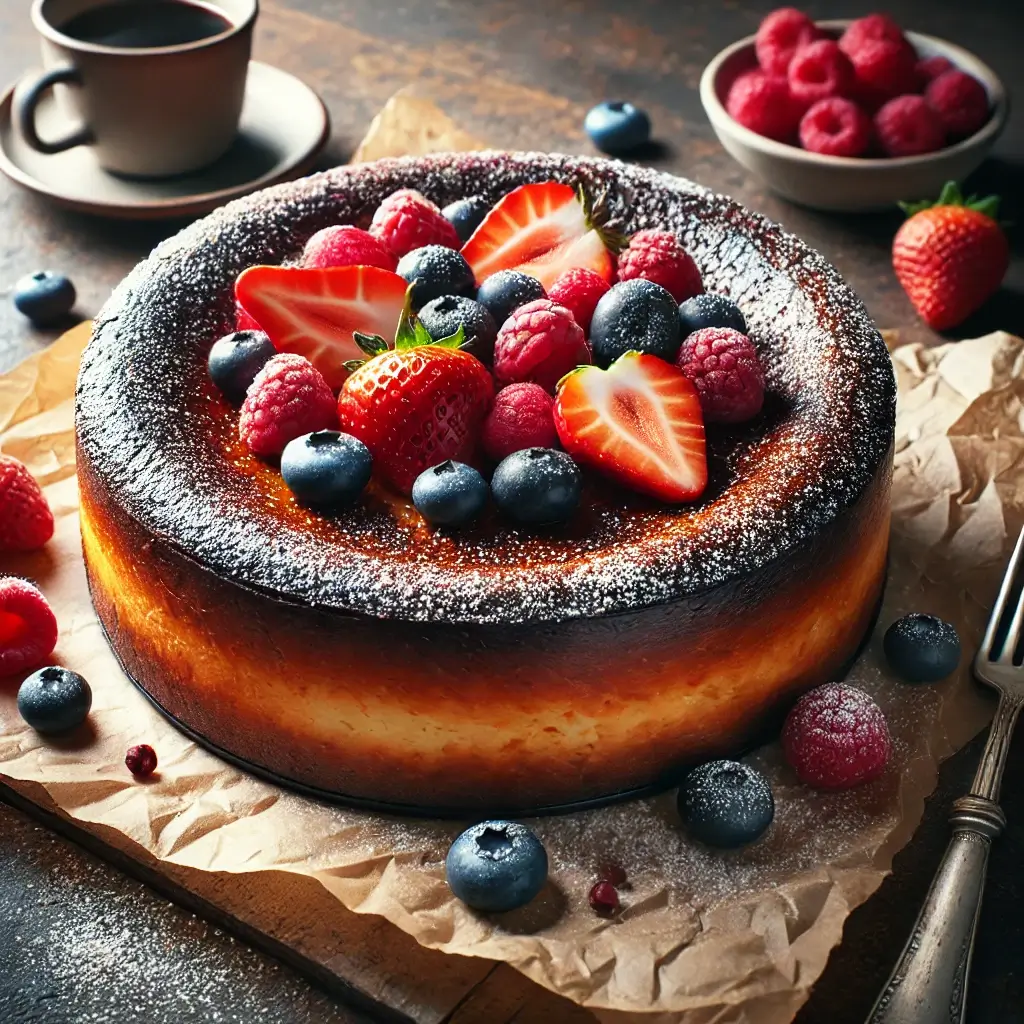
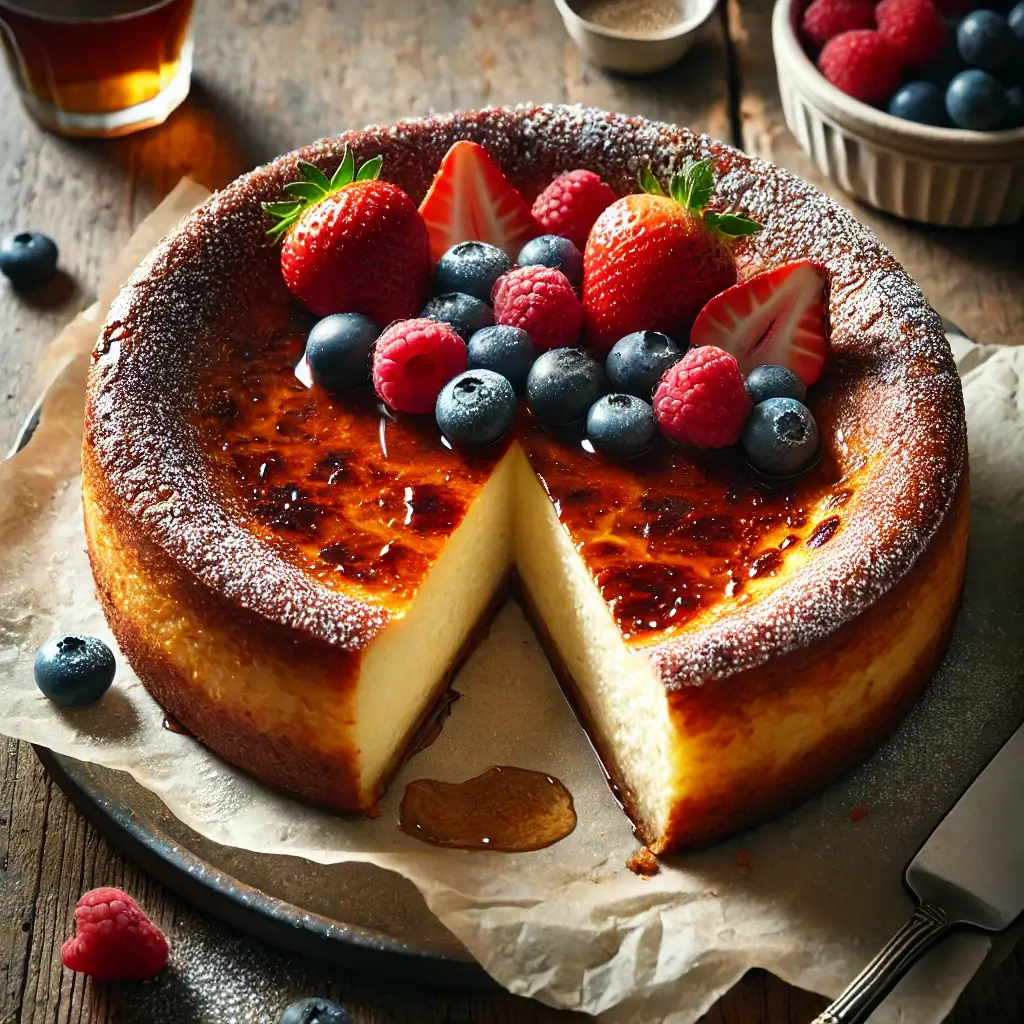
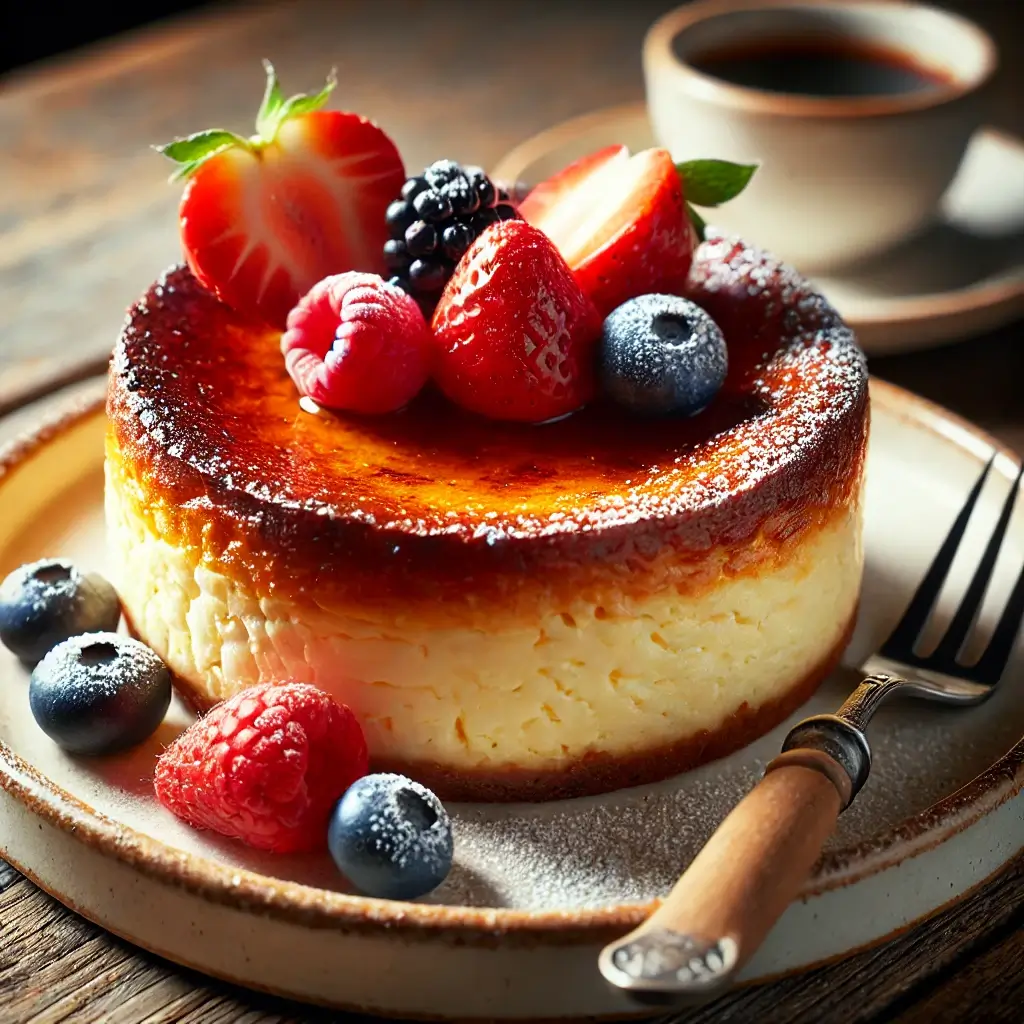
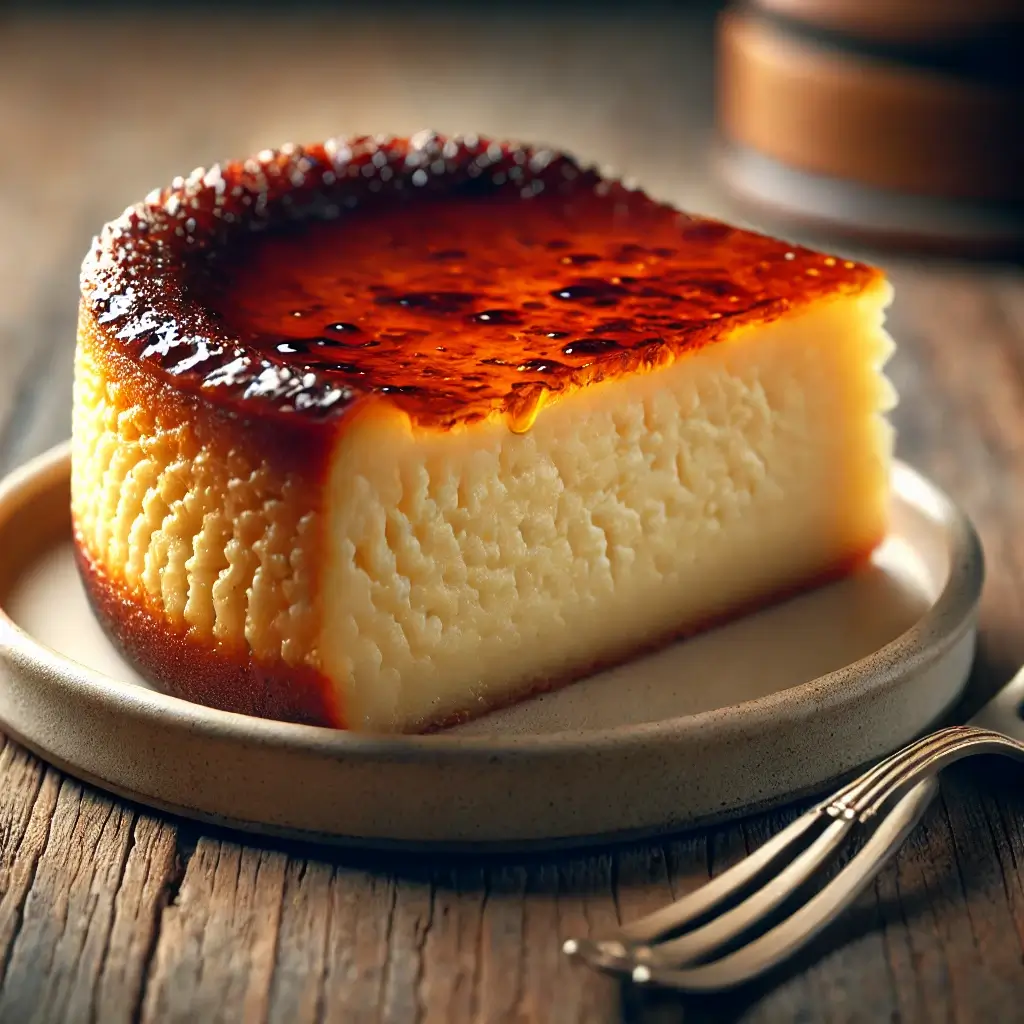
The signature of a Basque Burnt Cheesecake is a perfectly caramelized crust. The crust must be golden brown, with a rich, deep color that’s nearly burnt. The caramelized crust provides a satisfying crunch and a deep, sweet flavor to the cheesecake.
2. Creamy Interior:
The inside of a Basque Burnt Cheesecake must be creamy and silky, with a consistency that is comparable to custard. The cheesecake needs to be firm, but only just set and slightly wobbly in the center.
3. Burned, Not Overcooked:
Balance is key in the Basque Burnt Cheesecake. The cheesecake must be burnt, not overcooked. Ideally, an achieved Basque Burnt Cheesecake has a slightly puffed crust with a still lightly wobbly interior.
4. Deep, Rich Flavor:
A Basque Burnt Cheesecake must have a deep, rich flavor that is both sweet and savory. The cheesecake must be prepared using high-quality ingredients such as cream cheese, eggs, and sugar.
5. No Water Bath:
Unlike other cheesecakes, the Basque Burnt Cheesecake is not baked in a water bath. This enables the cheesecake to form a crispy, caramelized crust.
6. Flaws Are Welcome:
The Basque Burnt Cheesecake is all about welcoming flaws. The cream cheese filling should look homemade and rough around the edges, with a crust that has a few cracks and a center that’s not yet set.
By possessing these characteristics, a Basque Burnt Cheesecake is sure to impress even the most discerning dessert lovers. Whether you’re a seasoned baker or a beginner, the Basque Burnt Cheesecake is a dessert that’s sure to delight.
The Recipe: Basque Burnt Cheesecake (Servings: 8-10)
Ingredients:
For the crust:
- 1 1/2 cups (190g) all-purpose flour
- 1/2 cup (100g) granulated sugar
- 1/4 cup (50g) unsalted butter, melted
For the cheesecake:
- 2 pounds (900g) cream cheese, softened
- 1/2 cup (100g) granulated sugar
- 4 large eggs, separated
- 1 teaspoon vanilla extract
- 1 cup (240ml) heavy cream
For the caramelized sugar crust:
- 1/2 cup (100g) granulated sugar
Instructions:
- Preheat the Oven: Preheat the oven to 425°F (220°C).
2. Prepare the crust: In a medium bowl, whisk together the flour and sugar. Add the melted butter and mix until the dough comes together. Press the dough into the bottom of a 9-inch (23cm) springform pan.
3. Prepare the cheesecake: In a large mixing bowl, beat the cream cheese until smooth. Add the granulated sugar and beat until combined. Beat in the eggs, one at a time, followed by the vanilla extract.
4. Pour the Batter: Pour the cheesecake batter into the prepared pan over the crust.
5. Bake the cheesecake: Bake the cheesecake for 25-30 minutes, or until the edges are set and the center is slightly jiggly.
6. Prepare the caramelized sugar crust: In a small bowl, mix together the granulated sugar and 1 tablespoon of water.
7. Caramelize the sugar: Remove the cheesecake from the oven and sprinkle the sugar mixture evenly over the top. Return the cheesecake to the oven and bake for an additional 5-7 minutes, or until the sugar is caramelized and golden brown.
8. Cool the cheesecake: Remove the cheesecake from the oven and let it cool in the pan for 1 hour. Then, run a knife around the edges of the pan and release the springform.
9. Chill the cheesecake: Let the cheesecake cool completely on a wire rack, then refrigerate it for at least 4 hours or overnight.
Tips and Variations
- To ensure a smooth, creamy cheesecake, make sure to beat the cream cheese until it’s smooth and creamy.
- To achieve a perfectly caramelized sugar crust, sprinkle the sugar mixture evenly over the top of the cheesecake and bake for the recommended time.
- To add a touch of flavor to the cheesecake, try adding a teaspoon of liqueur, such as Grand Marnier or Cointreau, to the cheesecake batter.
- To make individual Basque Burnt Cheesecakes, simply divide the cheesecake batter evenly among 8-10 mini springform pans and bake for 15-20 minutes, or until the edges are set and the centers are slightly jiggly.
Nutrition Facts (per serving)
Here is the complete nutrition chart for the Basque Burnt Cheesecake:
- Serving size: 1 slice (8-10 slices per cake)
- Servings per recipe: 8-10
Macro-Nutrients
- Calories: 540
- Total Fat: 42g
- Saturated Fat: 24g
- Trans Fat: 0g
- Cholesterol: 120mg
- Sodium: 350mg
- Total Carbohydrates: 35g
- Dietary Fiber: 0g
- Sugars: 25g
- Protein: 15g
Micro-Nutrients
- Vitamin A: 20% of the Daily Value (DV)
- Vitamin C: 0% of the DV
- Calcium: 15% of the DV
- Iron: 10% of the DV
- Potassium: 8% of the DV
- Vitamin D: 0% of the DV
- Vitamin E: 0% of the DV
- Vitamin K: 0% of the DV
Other Nutrients
- Caffeine: 0mg
- Sugar Alcohols: 0g
- Artificial Sweeteners: 0g
Allergens
- Gluten: Contains wheat flour
- Dairy: Contains milk, heavy cream, and butter
- Eggs: Contains eggs
- Nuts: Does not contain nuts
- Soy: Does not contain soy
Special Diets
- Vegetarian: Not suitable for vegetarians who do not consume dairy or eggs
- Vegan: Not suitable for vegans
- Gluten-Free: Not suitable for gluten-free diets
- Keto: Not suitable for ketogenic diets
- Low-Carb: Not suitable for low-carb diets
Please note that this nutrition chart is an estimate and may vary based on the specific ingredients and portion sizes used.
Conclusion
The Basque Burnt Cheesecake is a grand dessert steeped in tradition and history. Its smooth, creamy interior and crunchy, caramelized exterior are sure to please even the most critical of tastes. Whether you’re an experienced baker or just starting out, this recipe will become a classic in your dessert repertoire.
Get ready to indulge! Click here to uncover the secrets of the Basque Burnt Cheesecake and start baking your own masterpiece today!